The AI Trap: why technology alone is not transformation.
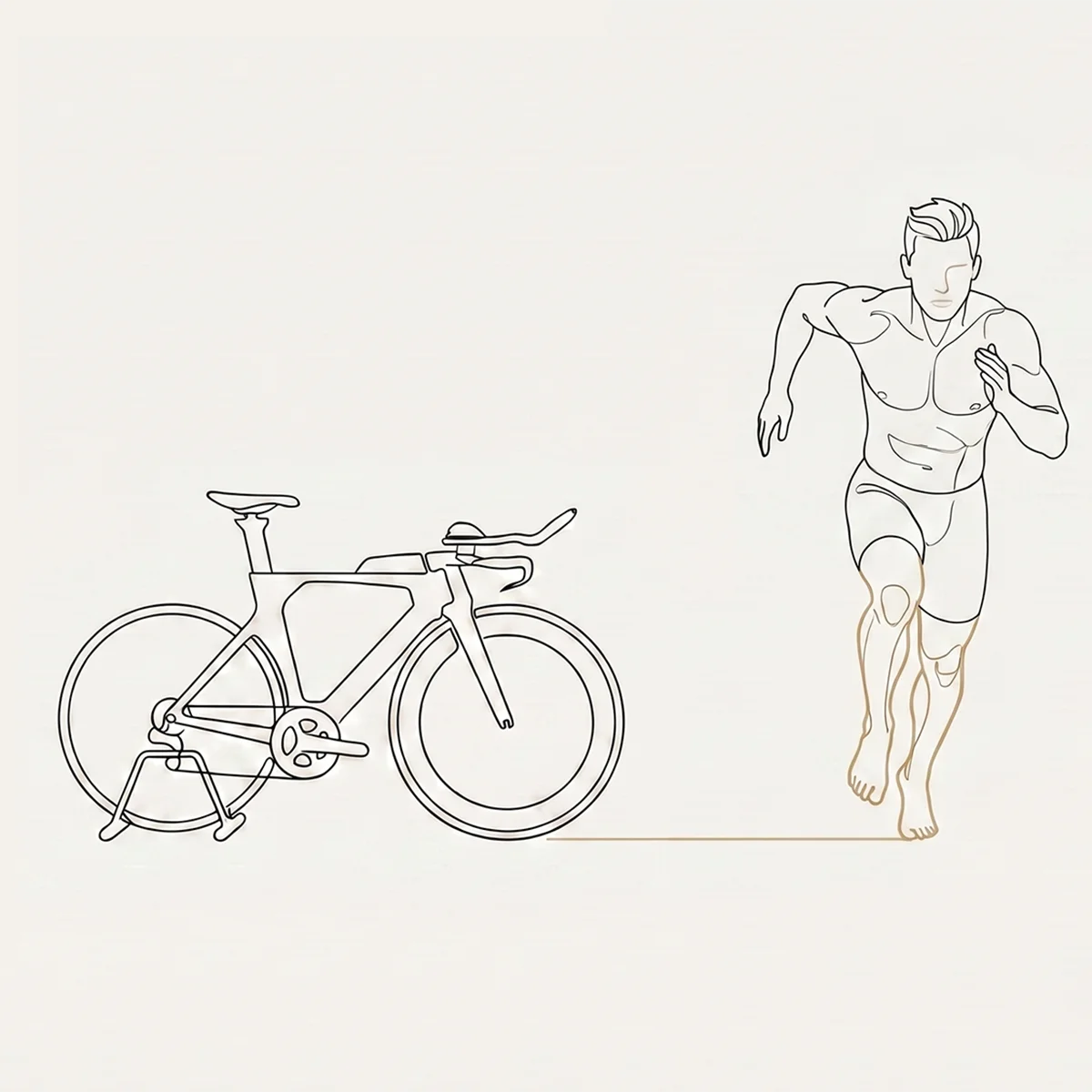
You can buy the bike. You cannot buy the legs. AI is equipment — transformation is conditioning, and nobody can put in the hours for you.
Robert DanielJune 20268 min read
I have had a version of this conversation more than once this year. "We rolled out Copilot to a hundred people six months ago. Adoption is at seventy-eight percent. Our workflows haven't changed. What did we miss?" The people asking are not naïve. The budgets work, the teams use the tools, the dashboards glow green. And yet the business they were promised — the one where AI redesigns how value gets created — has not arrived.
That gap is the whole subject of this piece. The last one ended on a hard edge: a mirror will show you what your business actually is, but seeing is not the same as acting. This is the acting. And the reason the acting so rarely happens is almost always the same.
They bought the bike. They never built the legs.
01 · The trap
Bought is not adopted. Adopted is not capable.
A short, honest aside on why I reach for that image, because it is not decoration. I have finished the Ironman distance three times — 3.8km swum, 180km on the bike, 42.2km run, in that order, in one day. That distance is supremely uninterested in your equipment: the lightest frame ever made will not carry you to the line if you have not put in the hours. So I read business performance partly through that lens, and I would rather say so plainly than pretend it is a framework I found in a book. Resilience is conditioning. There are no shortcuts — only the work. From here I will mostly speak the language the boardroom speaks — capability, operating model, decision rights — but the idea underneath stays the same.
The trap is quiet, and almost everyone walks into it: mistaking the purchase for the outcome. Acquiring a technology and being changed by it were never the same thing. We learned this in the digital wave. We are about to learn it again — faster, harder, at higher cost.
It helps to separate three states, rather than collapsing them into one. Equipped: the licences are provisioned, the platform is live, the vendor is paid. Active: people use it daily, and the adoption metric looks healthy. Capable: the way the business decides, operates and creates value has been rebuilt around what the tool makes newly possible — so it can now do things it genuinely could not before. Most companies reach Active, log the number, and declare victory. But high usage of a tool is not a transformed organisation. Two firms can hold the identical licence and sit on opposite sides of that line: one writes its emails faster; the other has become a different, more capable business. Tech-enabled is not tech-savvy — and the difference is not a feature you can buy.
Equipped
The licences are provisioned.
The platform is live, the vendor is paid, the rollout email has gone out. Everything that can be bought has been bought. On paper, you have arrived. In practice, nothing has yet changed.
Active
People use it daily.
The adoption metric looks healthy and the dashboard glows green. This is where most companies stop, log the number, and declare victory — mistaking high usage of a tool for a transformed organisation.
Capable
The business was rebuilt around it.
How it decides, operates and creates value has been reorganised around what the tool makes newly possible — so it can do things it genuinely could not before. The only state that compounds. The only one you cannot buy.
But notice what that ladder quietly assumes: that there is a top rung. There isn't. Capable is defined against what the tools make possible today — and the tools, and the possible, keep moving. The same thing happens in sport: a state of the art holds right up until someone climbs past it, and then it is merely the new baseline. The sub-eight-hour Ironman was once the outer edge of the imaginable; the two-hour marathon barrier — the Schallmauer that stood for a generation — fell this year. The summit does not stay put. It recedes the moment you reach it.
Which raises the obvious question — what is next? — and here is where it gets interesting, because that question is far too valuable to leave lying around. The incumbents claim it fast. Microsoft has already named the firm on the far side of this work: the Frontier Firm, an organisation "structured around on-demand intelligence" and "hybrid teams of humans and agents," which — they assure us — every company will be on its way to becoming within two to five years. It is a good phrase. I will use it. I will also note, in the spirit of the Jester whose whole job is to say the quiet part, that it arrives in the very same announcement as the agents, the Agent Store and the Copilot upgrades you will need to buy to get there. Naming the next summit and selling the climbing equipment is a time-honoured move, and a profitable one. Whether the Frontier Firm is the real horizon or a well-drawn sales map is a debate worth having out loud — and you should have it before you sign. The one thing not up for debate is the direction of travel: the bar keeps rising, and it is rising faster. So whatever you call the next stage, the response that works is the same one that always worked. Up your training regimen.
02 · The precedent we already lived
The digital wave — an opportunity mostly missed.
What I think of as the digital decade — roughly 2010 to 2020 — was the largest enterprise technology adoption cycle since personal computing. Companies bought content platforms, marketing automation, CRM systems, the lot. Most implementations were technically successful. Most transformations were not.
Nicholas Carr had already explained why. In The Big Switch he traced how computing was becoming a utility — drawn from the wall like electricity, available to everyone on identical terms. And a utility, by definition, confers no advantage simply by being switched on. The strategic value was never in having the technology. It was in what you reorganised around it. The equipment commoditises. The capability does not.
I watched this play out at Allianz. The data was already there; the platforms worked. What was missing was the reframe of digital from a marketing cost line into a P&L position — a change not of tooling but of how the organisation was structured to create and capture value. Sixteen new revenue streams in twelve months came out of that reframe, not out of any new system. The technology was the occasion. The redesign was the work.
The technology was the occasion. The redesign was the work. Confusing the two is how a decade of digital spending produced so little compounding change.
And the pattern is not anecdotal. Three years into the AI cycle, the broad surveys of corporate adoption are still struggling to find the productivity it was meant to unlock — the same flat returns the digital decade produced, and for the same reason. The capability did not arrive because nobody built it. It does not ship with the licence.
03 · Why the redesign is the hard part
The reason transformations fail isn't the technology. It's the change.
This is where the work actually lives — and where David Teece's whole career points. Durable advantage comes from an organisation's dynamic capabilities: its ability to sense a shift, seize it, and reconfigure itself around it. The technology is available to everyone on the same terms; the capacity to reorganise around it is not. That is where the advantage hides.
John Kotter spent decades cataloguing why change efforts collapse, and almost none of his reasons are technical. They fail because urgency is manufactured rather than felt; because the new way of working is never anchored into how the organisation operates; because leadership declares victory the moment the tool is live and stops doing the unglamorous work of rewiring everything around it. Read those failure patterns next to a typical AI programme and the resemblance is uncomfortable: the platform goes in, the dashboard turns green, the steering committee disbands — and the operating model it was meant to change is exactly where it started.
This is the part procurement cannot help you with. There is no vendor for decision rights, no demo for governance, no comparison matrix for the way a business has organised itself for a decade. The redesign lives in the places software never touches — who decides, who is accountable, how value moves — and those are the places that decide whether the technology amounts to anything at all.
A live proof, in slow motion
What it looks like when it actually happens.
DarkTools came to me with what looked like a website problem. They were on WordPress and WooCommerce, the database was buckling under a complex B2B product catalogue, updates were failing. The brief was a redesign — a better website. New equipment.
We never got to talk about the website. Or rather, I refused to, for about two weeks, because the website was the wrong subject. The real question was not what platform do we need; it was what business are we actually in? And the honest answer reframed everything: their edge was not a prettier storefront — it was the prospect of becoming best-in-class at giving a demanding B2B audience the supreme product information they need to specify their projects. Get that right and you do not have a better website; you have a better offer in your category. That single shift — from tool-first to model-first — dictated everything that followed:
One
The system was never going to do that.
A WordPress database could not carry that quality of information at that depth. So you do not patch the tool; you abandon it. The platform was a consequence of the ambition, not a constraint on it.
Two
Get the product catalogue in order.
Because that is the differentiating asset. The catalogue was not back-office hygiene; it was the lever for a categorically better offer in the category.
Three
Design around a product center of truth.
A single, authoritative core that sales, inspiration and commerce all orbit. Without a centre, those use cases float in a universe with no gravity. With one, they finally cohere.
Business case and data logic first. Platforms and tools follow. That is the entire argument of this piece, spoken by a client's situation rather than by me.
And here is the part that ties back to where the last piece left off. Notice that none of the three moves above is, strictly, an AI move. That is not an accident — it is the sequence. You do the homework first: you know what business you are in, you get your data honest, you build the centre of truth. Then — and only then — applying AI at scale becomes the thing you are finally ready for, rather than the thing you reach for to avoid the homework. That is the mirror's lesson made operational: see yourself clearly, build the business back around what you see, and the wand has something worth amplifying. At DarkTools that next chapter is loading now. More on it soon.
"Rob's right — and it cost me a few sleepless nights. I thought we had a website problem. He took two weeks of paid time before he'd use the word 'website' again. I had a board, revenue numbers, a team waiting for direction — and my consultant was telling me I'd been asking the wrong question for two years.
He doesn't make it easy. He'll push back on things you thought were settled, go deep on a decision you wanted to delegate, suggest the operating model needs restructuring on a Tuesday when you wanted to ship by Friday. But the architecture is sound, the governance framework will outlast us all, and the questions he forced us to answer turned this from a website project into a viable digital business. Just know the work he's describing is harder than it sounds."
Glenn Boccini · CEO, DarkTools
04 · Pace
Transformation is not a sprint. It's the longest race there is.
So you have understood the trap. You know the bike alone is not the point, and you have started — slowly, expensively, properly — to build the legs. There is one thing left that nobody tells you, and it is the thing that actually decides if you finish the race.
Pace.
Here is the orthodoxy of our age, and I want you to hear how seductive it is: move fast. Fail fast. Rapid-prototype your way to the future. Ship, learn, repeat. It sounds like courage. It sounds like exactly what a bold company should do with a powerful new tool. And on the AI bike leg, it is the single most reliable way to blow yourself up before you ever see the finish line.
Because here is what "move fast" forgets: there is a marathon after the bike.
The bike, the legs, the distance
What an Ironman actually taught me.
Let us recap what an Ironman actually is, because I have finished the full long-distance three times and it has taught me more about transformation than any framework ever did. We are talking about the long-distance triathlon — a 3.8-kilometre swim, then 180 kilometres on the bike, then a full 42.125-kilometre marathon, run on legs that have already given you everything they had on the bike. In that order. In one day. No stopping.
For the specialists: "Ironman" is in fact a brand, licensed to race events that boast qualification slots for the World Championships in Hawaii. There are now various formats like the 70.3 — but we will use the term for the iconic, gruelling long distance synonymously.
The single most common way to fail it is not weakness, not bad equipment, not the wrong bike. It is going out too hard on the bike. You feel strong, the carbon is fast, the road is open, the temptation to spend everything is overwhelming — and if you give in, you arrive at the marathon with nothing left, and the race quietly ends while you are still moving. I have felt that emptiness. I have also learned, the hard way, the one thing that gets you to the line: you find the rhythm at which your body — your form, your conditioning, your limits — can drive your bike, the best one you could afford, for the entire 180 kilometres without emptying the tank. Not the fastest possible split. The fastest sustainable one. That is pace, and the point is to go as fast as you can, while holding back just enough to make it to the finish line alive. At that, a paced Ironman is savagely fast.
Now read that back as a business and nothing needs translating. The bike is the technology — buy the best one you can. The legs are the capability you build around it — the only thing that turns equipment into advantage. And pace is the discipline that will actually break the mould: deploying that capability at the fastest rhythm you can actually sustain, over a distance far longer than the quarter everyone is optimising for. Move-fast-and-break-things is the athlete who attacks the bike leg and walks the marathon. Tech-enabled, briefly thrilling, and nowhere near the finish.
Bike, legs, and pace. That is the whole race. Most companies buy the bike and hope it will ride itself. The smart ones build the legs, too. And the ones who actually transform — who are still standing, still compounding, when the marathon comes — are the ones who found their pace. There are no shortcuts. There is only the distance, and the rhythm that carries you across it. Take it from someone who has suffered every kilometre of it, three times, and made it to the line each one.
Robert Daniel
Executive Sparring Partner
The one who helps you build the legs, not just buy the bike.
Not how to buy the technology — how to build the capability around it. On why the equipment commoditises, where durable advantage actually comes from, why change efforts fail, and what the loudest vendor wants the next summit to be. Read the vendor, then read around the vendor.
Mistaking the purchase for the outcome. Acquiring a technology and being changed by it were never the same thing. Most companies buy the tool, log a healthy adoption number, and declare victory — but high usage of a tool is not a transformed organisation. You can buy the bike; you cannot buy the legs. The capability that turns equipment into advantage is built, not bought.
02.What's the difference between equipped, active, and capable?+
Equipped: the licences are provisioned and the platform is live. Active: people use it daily and the adoption metric looks healthy. Capable: the way the business decides, operates and creates value has been rebuilt around what the tool makes newly possible — so it can do things it genuinely could not before. Most companies reach Active and stop. Tech-enabled is not tech-savvy, and the difference is not a feature you can buy.
03.Why hasn't AI delivered the productivity it promised?+
Because the capability was never built. Three years in, the broad surveys of corporate adoption are still struggling to find the productivity it was meant to unlock — the same flat returns the digital decade produced, and for the same reason. The technology does not ship with the redesign. The returns aren't there because nobody did the work of reorganising the business around what the tool makes possible.
04.Haven't we lived through this before?+
Yes — the digital decade, roughly 2010 to 2020. The largest enterprise technology adoption cycle since personal computing. Most implementations were technically successful; most transformations were not. Carr's Big Switch explained why: computing became a utility, and a utility confers no advantage simply by being switched on. The strategic value was never in having the technology — only in what you reorganised around it. We are about to learn it again, faster.
05.Is the "Frontier Firm" the goal?+
Microsoft coined the term in 2025 for an organisation structured around on-demand intelligence and hybrid human-agent teams. It's a good phrase — but it arrives in the same announcement as the agents and tools you'd need to buy to get there. Naming the next summit and selling the climbing equipment is a time-honoured move. Whether it's the real horizon or a well-drawn sales map is a debate worth having before you sign. What's not up for debate: the bar keeps rising, so up your training regimen.
06.Isn't "move fast and fail fast" the right posture for AI?+
On the bike leg of an Ironman, going out all-out is the most reliable way to blow up before the marathon — the part that actually decides whether you finish. Same here. Move-fast-and-break-things is briefly thrilling and ends nowhere. The goal isn't slow; it's the fastest pace you can actually sustain over a distance far longer than the quarter everyone optimises for. A paced effort is savagely fast — it's simply still alive at the finish. Speed without capability is just expensive motion.
07.So what's the big idea, in a nutshell?+
Bike, legs, and pace. Buy the best technology you can — that's the bike. Build the capability around it — that's the legs, the only thing that turns equipment into advantage, and the part nobody can do for you. Then deploy it at the fastest rhythm you can sustain over the real distance — that's pace. Most companies buy the bike and hope it rides itself. The ones who actually transform found their pace. It's the thread running through the whole POV series.
The conversation worth having
Want to find your pace in the AI race together?
Sixty minutes. No agenda required. You can buy the technology in an afternoon and spend a year building the capability around it — but the rhythm that carries your business across the distance without blowing up is the part worth thinking through with someone who has ridden it. That is the conversation.